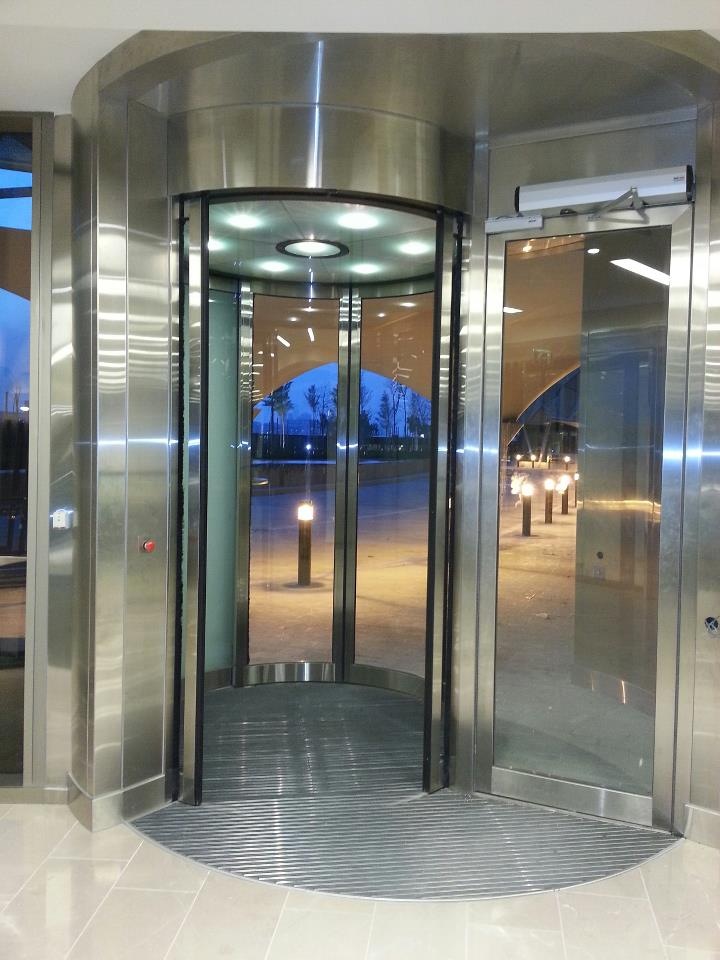
The Ultimate Guide to Revolving Doors: Benefits, Types, and Installation
The unassuming revolving door is a ubiquitous feature in modern architecture, yet its complexity and significant benefits are often overlooked. Far more than a mere entryway, the revolving door is a sophisticated climate control, security, and traffic management system. From high-rise corporate headquarters to bustling hospitals and vibrant retail centers, these cylindrical entrances play a critical role in maintaining building efficiency and user comfort.
If you are an architect, building manager, or business owner considering an upgrade to your building's entryway, understanding the fundamental mechanics, vast benefits, and various types of revolving doors is essential. This guide offers a deep dive into the world of revolving doors, providing the necessary insights to make an informed decision for your next installation.
The Undeniable Benefits of Revolving Doors
The primary function of any revolving door is to facilitate the smooth flow of pedestrian traffic while creating a virtually impenetrable air seal. This dual capability delivers a host of advantages that traditional swinging or sliding doors simply cannot match.
1. Superior Energy Efficiency and Climate Control
This is arguably the most significant benefit of a revolving door. A standard swinging door acts like a piston, forcing conditioned air out and drawing unconditioned air (hot, cold, or humid) into the building every time it opens. This phenomenon, known as the "stack effect" or "chimney effect," dramatically increases HVAC (Heating, Ventilation, and Air Conditioning) loads and energy bills.
A revolving door, conversely, is an "always-closed" system. It consists of three or four panels (wings) rotating within a cylindrical enclosure. The rotating wings allow people to enter and exit through separated compartments, ensuring that an air barrier is maintained at all times. A revolving door can reduce air infiltration by up to 8:1 compared to a conventional swing door. In buildings with high traffic volume, this translates to massive energy savings, often justifying the initial investment within a few years.
2. Effective Noise and Dirt Reduction
Beyond air, the sealed nature of a revolving door is highly effective at blocking external noise and environmental pollutants. By creating a buffer zone between the interior and the outside world, these doors significantly reduce the intrusion of city traffic noise, wind, and street dirt. This contributes to a quieter, cleaner, and more pleasant internal environment for occupants, which is especially valued in hotels, residential towers, and office buildings.
3. Optimized Pedestrian Traffic Flow
For high-volume entryways, revolving doors are champions of efficiency. They regulate the flow of traffic by providing dedicated compartments, which inherently impose a safe, one-directional pace. Unlike swing doors, which can create bottlenecks as people collide or wait for the door to close, a properly sized revolving door can handle a high throughput of people per minute (PPM) simultaneously in both directions. This is a crucial feature for locations like airports, convention centers, and subway stations.
Understanding the Different Types of Revolving Doors
The term "revolving door" covers a diverse range of products, each engineered for specific traffic volumes, security needs, and aesthetic requirements. Choosing the correct type is paramount to maximizing its performance and longevity. The primary differentiators lie in the number of wings and the mechanism of operation.
1. Manual Revolving Doors (MDRs)
Manual revolving doors are the most basic and common type. They require the user to push the wings to initiate rotation.
- Operation: User-powered rotation.
- Best Suited For: Buildings with medium-to-low traffic, where energy savings are still desired, but the cost and complexity of automation are not justified.
- Key Features: They typically incorporate a speed control mechanism (governor) to prevent users from spinning the door too quickly, ensuring user safety and door integrity. They are often the most cost-effective option.
2. Automatic Revolving Doors (ADRs)
Automatic revolving doors are equipped with motion sensors (usually overhead radar sensors) that detect an approaching user and initiate rotation automatically at a preset, safe speed.
- Operation: Motor-powered rotation triggered by sensors.
- Best Suited For: High-traffic areas (airports, major hospitals, corporate lobbies) where consistent, smooth flow is critical. They are ideal for accommodating users with luggage, carts, or limited mobility.
- Key Features: They often feature a "slow" speed for the elderly or disabled and a "standby" mode when no one is approaching. They provide the ultimate blend of energy efficiency and convenience.
3. High-Security/Controlled-Access Revolving Doors
These sophisticated revolving doors are not just about climate control; they integrate access control and anti-tailgating technology.
- Operation: Requires successful credential verification (e.g., key card, biometric scan) before the door rotates.
- Best Suited For: Highly sensitive areas, data centers, government buildings, and secure offices where only one authorized person is allowed per rotation (called "single-person passage").
- Key Features: They often use weight sensors or optical scanners within the floor of the compartment to ensure compliance and prevent tailgating (two people entering on a single authorization).
Revolving Doors by Number of Wings
A. Three-Wing Revolving Doors
- Characteristics: These doors feature three panels and provide the largest individual compartment space.
- Traffic Flow: Excellent for high-volume traffic that may include occasional luggage, shopping carts, or wheelchairs. The larger compartment offers easier maneuvering.
- Energy Efficiency: Highly effective, though slightly less efficient than a four-wing door because the open space between wings is larger.
B. Four-Wing Revolving Doors
- Characteristics: These doors feature four panels, creating smaller, tighter compartments.
- Traffic Flow: Ideal for extremely high, continuous flow of pedestrian-only traffic (e.g., transit stations). The smaller compartments increase the throughput rate (PPM).
- Energy Efficiency: Considered the most energy-efficient configuration. The four-wing design minimizes the space that is open to the exterior air at any given moment, thus maximizing the air seal.
Key Features and Safety Standards in Revolving Doors
While the efficiency of a revolving door is paramount, modern installations must comply with rigorous safety standards to protect users of all ages and abilities. These features often involve sophisticated sensors and mechanical fail-safes.
1. Emergency Break-Out Systems
In any enclosed space, emergency egress is a primary safety concern. Modern revolving doors are mandated to include a break-out system, often referred to as "panic break-out."
- Functionality: In a fire or other emergency, the door wings can be manually pushed outwards to fold flat against the sides of the enclosure.
- Result: This instantly transforms the cylindrical enclosure into a clear, open passage, allowing a high volume of traffic to exit quickly and safely, complying with local building codes for emergency exit pathways.
2. Comprehensive Safety Sensors
Automatic revolving doors rely on multiple layers of sensing technology to prevent injury and damage. These sensors typically meet stringent standards like those set by the American National Standards Institute (ANSI) and various European norms.
Sensor TypeLocationPrimary FunctionPresence/Safety CurtainsVertical edges of the door wingsDetect objects (limbs, luggage) between the rotating wings and the fixed side walls, immediately stopping rotation.Leading Edge SensorsBottom edge of the door wingsDetect obstacles on the floor or approaching the door entrance, preventing the door from pushing into someone.Torque SensorsMotor/Drive SystemMonitor the amount of force applied. If resistance exceeds a safe threshold (e.g., someone is caught), the motor stops instantly.
3. Night Locking and Security
When a building closes for the day, the revolving door must be secured. Most units offer robust locking mechanisms.
- Manual Locks: Simple floor bolts or deadbolts integrated into the header or floor plate.
- Automatic Locking: For high-security doors, electromagnetic locking systems can be engaged remotely.
- Positioning: For ultimate security and weatherproofing overnight, the door wings can be aligned to form a complete, solid barrier across the entrance opening.
4. Construction Materials and Aesthetics
The materials used in the construction of revolving doors affect not only their durability but also their contribution to the building's aesthetic appeal.
- Enclosure: Typically uses strong, durable materials like aluminum, stainless steel, or bronze, often with clear glass walls for transparency.
- Wings: Safety laminated or tempered glass is standard for the wings to ensure visibility and structural integrity.
- Finishes: Custom finishes (e.g., polished brass, anodized aluminum, powder-coated colors) allow the revolving door to seamlessly integrate with or dramatically accent the building's facade.
The Installation and Maintenance of Revolving Doors
The successful operation and long lifespan of a revolving door heavily depend on meticulous site preparation and adherence to a strict maintenance schedule. Unlike simple swinging doors, a revolving door is a complex electromechanical system requiring specialized planning and service.
1. Pre-Installation Site Assessment
Before any component of the revolving door is delivered, a thorough assessment of the entryway is critical.
- Foundation and Floor Tolerance: Revolving doors require a perfectly level and stable floor surface. Any unevenness can lead to friction, premature wear on seals, and poor door operation. The manufacturer's specifications for flatness and load-bearing capacity must be strictly met.
- Electrical Requirements: Automatic revolving doors need dedicated power supply lines. This includes standard power for the motor and lighting, and often separate connections for low-voltage safety sensors and access control systems.
- Header and Overhead Support: The structural integrity of the ceiling or header above the door must be sufficient to bear the significant weight of the revolving door unit, especially for automatic models where the motor and control mechanisms are housed in the canopy.
2. The Installation Process
Installation is a multi-stage process best performed by factory-certified technicians.
- Cylinder Placement: The outer drum or cylinder is positioned and secured to the prepared foundation. This structure defines the perfect circle required for the door to spin freely.
- Rotor Assembly: The central core, including the hub and the door wings, is carefully lowered into the cylinder.
- Mechanical & Electrical Integration: For automatic doors, the motor, speed controller (governor), and control panel are installed within the overhead canopy. All wiring for sensors and safety systems is connected.
- Final Adjustments: This crucial step involves setting the rotational speed, ensuring minimal gaps between the wings and the drum walls, and calibrating all safety sensors for maximum responsiveness. The effectiveness of the air seal—the core benefit of a revolving door—relies on these precise adjustments.
3. Essential Preventative Maintenance (PM)
A revolving door is a high-cycle machine; thus, preventative maintenance is non-negotiable. Skipping service can lead to major component failure and compromise the door's energy-saving benefits.
ComponentMaintenance Frequency (Minimum)Action RequiredSeals and Weather StrippingQuarterly/Bi-annuallyInspect for wear, rips, or hardening. Worn brushes significantly degrade the air seal, impacting efficiency. Replace as needed.Drive Motor and GearsBi-annuallyCheck fluid levels (if applicable), inspect for leaks, and lubricate moving parts to ensure quiet and smooth operation.Safety Sensors & SwitchesQuarterlyTest the functionality of all presence, leading edge, and emergency stop sensors. Recalibrate sensitivity to ensure compliance.Speed Control (Governor)AnnuallyCheck and adjust the mechanical or electronic speed control mechanism to ensure the door operates within safe RPM limits.Proper maintenance not only extends the life of the revolving door but ensures it continues to deliver optimal performance, retaining its high energy-efficiency ratings and safety compliance throughout its operating life.
Conclusion: Making the Case for the Revolving Door
The revolving door stands as a sophisticated and necessary fixture in contemporary high-performance buildings. While the initial investment is higher than that of a standard swing door, the long-term returns—derived from substantial reductions in energy consumption, enhanced climate control, effective noise abatement, and superior traffic management—make the business case undeniable.
For building professionals seeking to achieve LEED certification, reduce operational costs, and elevate the user experience, integrating the appropriate type of revolving door is one of the most effective strategies available. By understanding the types, adhering to safety standards, and committing to proper installation and maintenance, a building can leverage the full potential of this efficient, secure, and constantly "revolving" entryway solution.
.jpg)
.jpg)