The Ultimate Guide to Automatic Sensor Doors: Types, Tech, and Safety
The ubiquitous presence of sensor doors in modern life—from airports and hospitals to supermarkets and corporate lobbies—is a testament to their unparalleled combination of convenience, accessibility, and efficiency. These automated entrances have fundamentally transformed the flow of pedestrian traffic in high-volume environments, moving beyond a simple architectural feature to become an essential component of modern building design.
For businesses and property managers in the UAE, choosing the right automatic door system is a critical decision that impacts safety, accessibility compliance, security, and long-term energy costs. GlazTech, a leading Dubai-based supplier, is dedicated to providing bespoke, high-performance automatic door solutions tailored to the unique demands of the Gulf climate and regulatory environment.
This comprehensive guide breaks down the world of automatic sensor doors, exploring the various types, the technology that powers them, and the essential safety features that govern their use.
1. Understanding the Core Mechanism
At its heart, an automatic sensor door system is a sophisticated piece of mechatronics relying on a closed-loop control system. This system has three primary components:
- The Sensor (The Eyes): Detects the approach or presence of a person or object and sends a signal.
- The Controller (The Brain): Receives the signal and commands the motor and locking mechanisms according to pre-set parameters (e.g., speed, hold-open time).
- The Operator (The Muscle): The motorized component, often housed above the door frame, that physically drives the door open and closed along its track or via a hinge.
2. A Taxonomy of Automatic Door Types
The term sensor doors encompasses several distinct door types, each designed for specific aesthetic, space, and traffic requirements.
A. Sliding Doors (The Most Common)
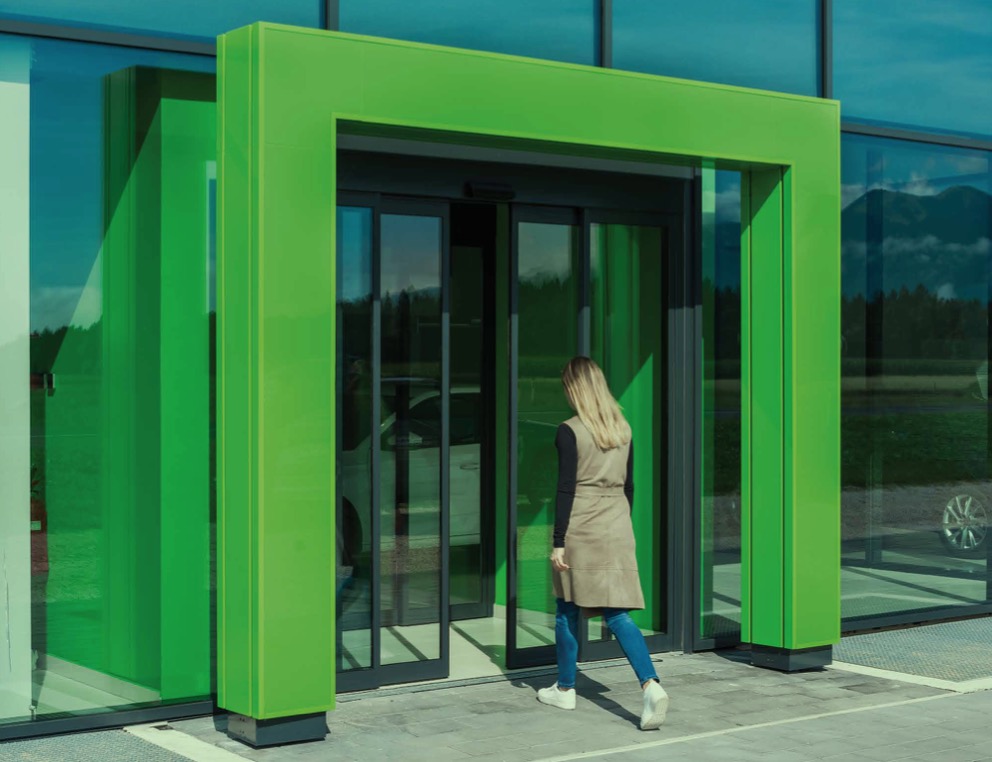
This is the classic automatic entrance seen in most commercial buildings across Dubai. They glide horizontally along a track, usually into pockets or over fixed sidelights.
- Single-Slide: One door panel moves to one side to create the opening.
- Bi-Parting Slide: Two panels move away from the center simultaneously, offering a wider clear opening and faster operation, ideal for high foot traffic areas like malls.
- Telescoping Doors: Two or more panels on each side stack behind one another, providing an even wider clear opening in a restricted space, perfect for luxury showrooms or industrial access.
B. Swing Doors
Also known as automatic hinged doors, these operate similarly to a manual door but are powered by a door operator mounted on the frame or within the door header.
- Low-Energy Operators: These open and close slowly and use less force, relying on a "knowing act" like a push-button. They are common in interior offices and restrooms.
- High-Energy Operators: These move faster and are generally activated by motion sensors, requiring a full suite of safety features to prevent injury.
C. Folding Doors
These doors consist of multiple panels that fold up accordion-style as they open.
- Application: Excellent for entrances where space is limited on either side, as they require minimal side clearance compared to sliding doors.
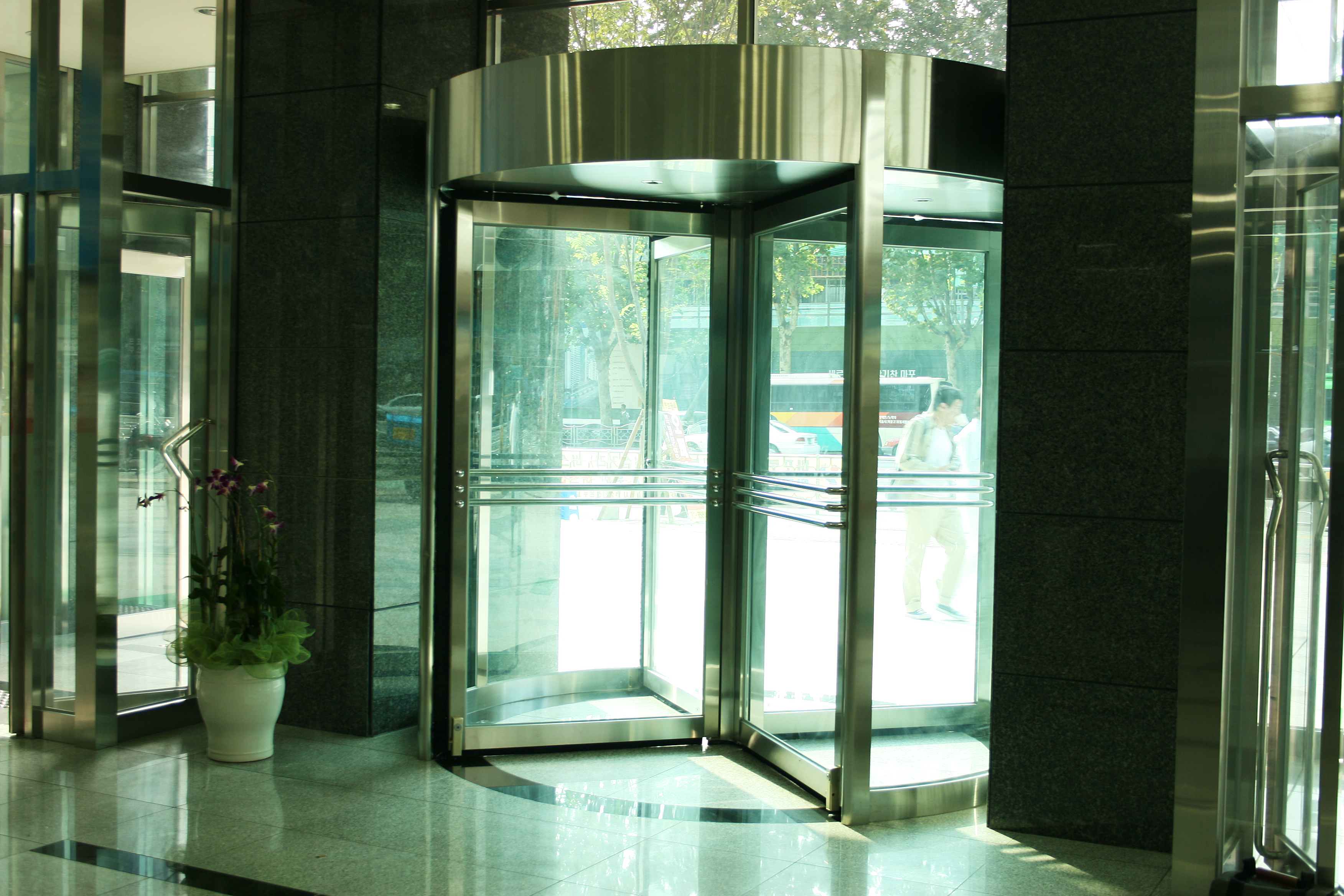
D. Revolving Doors
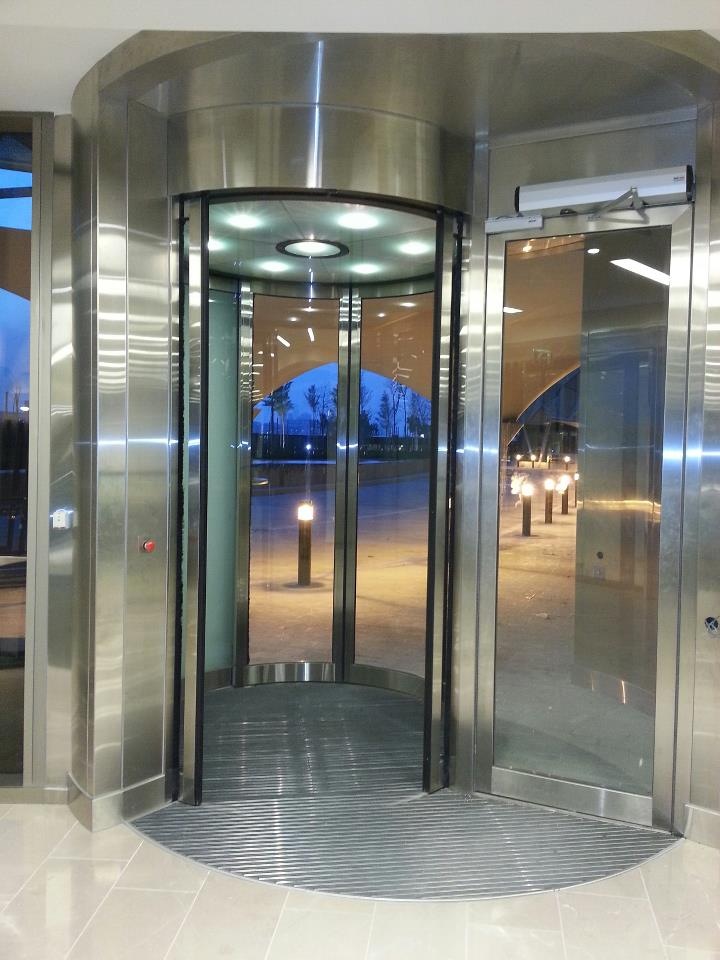
Automatic revolving doors offer the best energy efficiency, a critical factor in the hot UAE climate. They create a constant airlock, minimizing air exchange between the conditioned interior space and the exterior, dramatically reducing HVAC costs.
- Safety: These are equipped with comprehensive pressure and non-contact sensors to monitor all compartments and prevent entrapment.
3. The Activation Technology: The Brains of Sensor Doors
The technology that senses a person's presence is the defining feature of all sensor doors. Modern systems often combine multiple sensor types for redundancy and enhanced safety.
A. Microwave Motion Sensors (Radar)
- Principle: These sensors emit microwave (radar) rays and detect a shift in the frequency of the returning waves caused by a moving object (the Doppler effect).
- Use: Primary activation sensors for high-traffic entrances. They are fast, reliable, and work well in varying weather conditions, including dust.
- Note: Since they only detect motion, a secondary safety sensor is crucial.
B. Active Infrared (IR) Sensors
- Principle: These sensors project invisible infrared beams downward or outward. They measure the time it takes for the light to return.
- Use: Critical as safety/presence sensors (often called "safety curtains" or "safety beams"). They detect presence (a stationary object) as long as the object is breaking the beam, preventing the door from closing and ensuring maximum user safety.
C. Knowing Act Sensors (Touchless Activation)
Driven by accessibility requirements and the high demand for hygienic, touchless solutions in the modern office and healthcare sector:
- Wave-to-Open: Users wave a hand in front of a sensor to activate the door, ideal for laboratories, hospitals, and high-end retail.
- Push-Plates/Buttons: Often required for accessibility compliance, strategically placed at accessible heights.
4. Safety & Standards: Ensuring Safe Operation
Safety is paramount for all commercial sensor doors. In the UAE, installations must adhere to international best practices and local civil defense requirements.
A. Key Safety Mechanisms
Safety FeatureFunction & ImportancePresence SensorsEssential for preventing entrapment. These infrared beams monitor the doorway opening and stop the door from closing, or instantly reverse it, if a person or object is detected in the closing path.Force LimitationThe door's controller limits the maximum force it can exert during its closing cycle. If resistance is encountered, the door immediately reverses to prevent injury.Breakout/Emergency EgressA non-negotiable feature for fire safety. Sliding doors must allow the panels to be manually pushed outward to create a large clear path for emergency exit, compliant with Dubai Civil Defence regulations.Emergency Power BackupA critical battery backup system that ensures the door can complete an open cycle or secure a lock-down during a power outage, maintaining both safety and security. GlazTech ensures all critical doors have this feature.
5. Maintenance and Longevity in the UAE Climate
The demanding climate of the UAE—characterized by intense heat, high humidity, and occasional dust storms—requires that automatic doors be built with robust components and maintained rigorously.
- Heat Resilience: Door operators must be rated for high ambient temperatures to prevent overheating and premature component failure.
- Dust Protection: Tracks and controllers need excellent sealing to prevent fine desert dust from causing mechanical or electronic malfunctions.
- Regular Servicing: The average lifespan of a well-maintained commercial sensor door system is often 10 to 15 years, but reliability hinges on routine care. GlazTech offers tailored service contracts to ensure components are regularly inspected, cleaned, and lubricated, focusing on the tracks, belts, motors, and, most critically, the safety sensors.
6. GlazTech: Your Partner for Automatic Doors in Dubai
As a leading Dubai-based supplier, GlazTech understands the specific requirements of the local market, including compliance with accessibility laws and the need for energy-saving solutions to manage high cooling costs. We provide a full-service experience, from initial design consultation and supply of high-grade European components to professional installation and certified maintenance services.
For a new build or a system upgrade, choosing GlazTech means choosing reliability, safety, and local expertise.
? Frequently Asked Questions (FAQ) for Dubai Clients
Q1: What are the main benefits of automatic sensor doors for a business in Dubai?
A: The primary benefits are energy savings (by minimizing open-door time, which reduces the load on your A/C), enhanced customer convenience and traffic flow, compliance with accessibility standards (like those supporting People of Determination), and providing a modern, professional aesthetic.
Q2: Are GlazTech's sensor doors compliant with Dubai Civil Defence (DCD) requirements?
A: Absolutely. GlazTech only supplies and installs systems that meet international safety standards (such as EN 16005) and local DCD requirements, especially regarding emergency egress and breakout functions for sliding doors.
Q3: How does the intense Dubai heat affect the door mechanics?
A: Standard operators can overheat. GlazTech specifies heavy-duty operators with higher temperature ratings and utilizes components designed to withstand the harsh environment, ensuring reliability and minimizing downtime during peak summer months.
Q4: How often should automatic sensor doors be serviced in high-traffic areas like a mall?
A: For high-traffic commercial applications in Dubai, we highly recommend a quarterly maintenance contract. Regular servicing is essential to clean tracks, calibrate sensors, and check high-wear parts like belts and rollers, preventing costly sudden failures.
Q5: Can GlazTech provide custom glass solutions for the doors?
A: Yes. As a leading glass technology supplier, GlazTech specializes in custom glazing, including safety laminated glass, tinted or solar-control glass to further reduce heat gain, and specialized low-iron glass for maximum clarity.
Q6: What is the typical lead time for supplying and installing an automatic sliding door in Dubai?
A: Lead times vary based on complexity and customization. For standard high-volume systems, GlazTech maintains local stock to ensure swift delivery. For fully custom solutions, we provide a detailed project timeline upon consultation.
Q7: Do automatic revolving doors really save energy compared to sliding doors?
A: Yes, significantly. Revolving doors function as a constant airlock, creating a complete seal that prevents hot exterior air from rushing in and cold interior air from escaping. This results in far greater thermal efficiency than even the fastest sliding door, providing maximum energy cost reduction in Dubai's climate.
.jpg)
.jpg)